First Balfour, in partnership with the Energy Development Corporation’s (EDC) BINHI program, has established a new pocket forest at its Head Office in Sucat, Parañaque.
The pocket forest, an urban sanctuary where every tree planted is a threatened native species rescued by EDC BINHI, is set to provide cleaner air and a cooler environment in the vicinity, while contributing to the preservation of Philippine biodiversity for future generations.

Newly installed pocket forest at First Balfour
Growing Cleaner and Cooler Air
The initiative came to life on September 19, when First Balfour employees planted 58 seedlings from 14 native species to establish a pocket forest based on the Miyawaki concept—a method that involves densely planting a diverse mix of native trees, fostering competition and enabling growth up to ten times faster than traditional reforestation.
Once mature, the First Balfour pocket forest is estimated to sequester approximately 1.53 tons of carbon dioxide. A study also shows that urban forests help clean the air and cool their immediate surroundings, with temperature drops ranging from 0.5°C in a low scenario (minimum effect) to as much as 2°C in a high scenario (maximum effect).
In its first three years, the young pocket forest can already cool nearby areas by about 0.5–1°C through shade and cooling. By years three to five, as the canopy thickens and matures, this effect can reach 1–2°C, while also capturing more carbon and filtering more air pollutants.
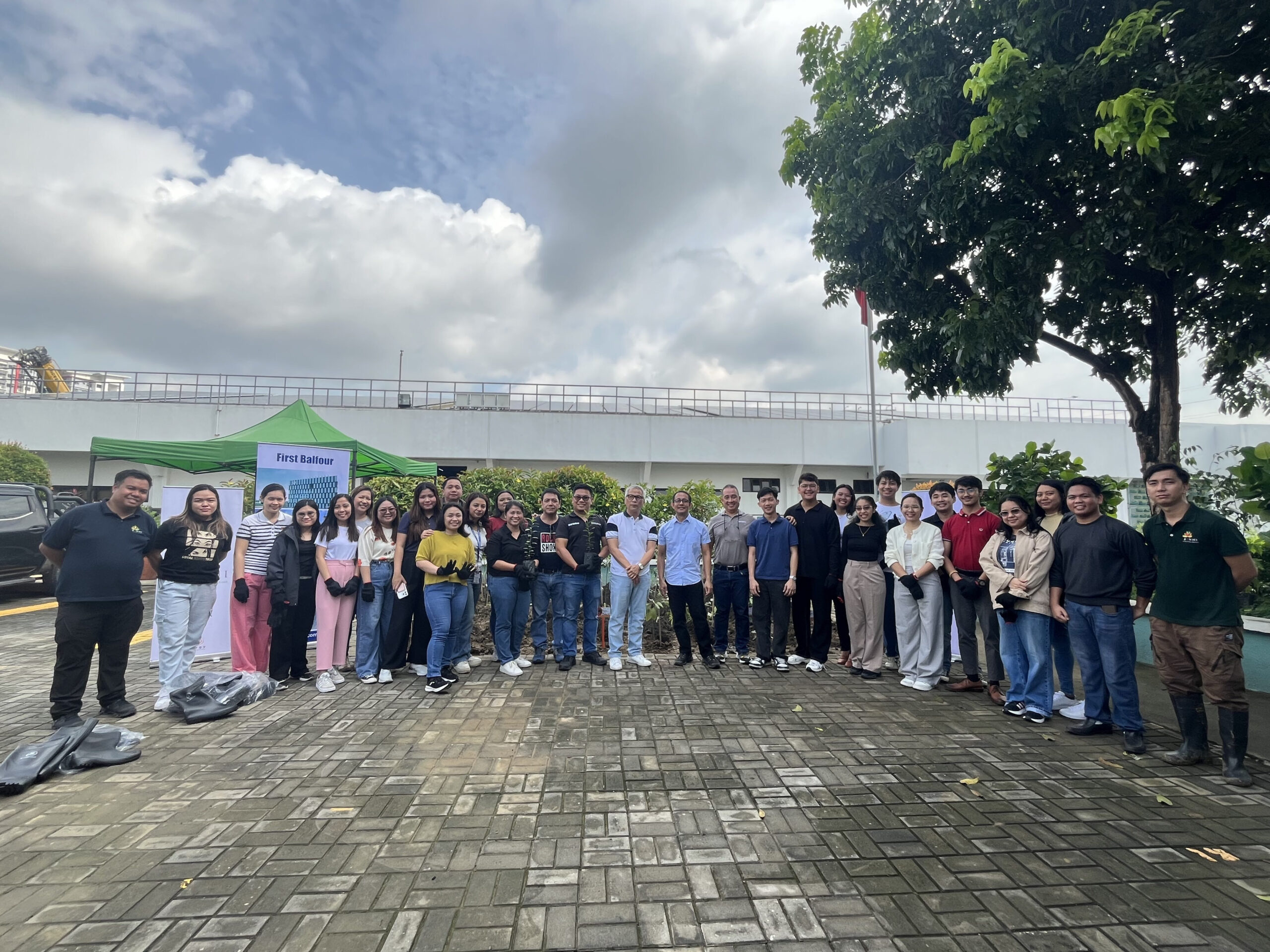
Tree planting was joined by First Balfour employees—including Management Trainees and members of the Green Thumb Club—EDC representatives, and leaders from both organizations.
First Balfour Vice Chairman and Chief Executive Officer Anthony Fernandez, who initiated the project, emphasized its deeper purpose, “We envisioned the pocket forest as a vibrant green oasis in the middle of a concrete jungle. Beyond its aesthetic appeal, this urban greenspace is expected to be a valuable source of cleaner air and a cooler environment, helping to lower temperatures by an estimated 0.5 to 2°C providing much-needed respite from the heat and pollution of the city. Ultimately, we believe this pocket forest will serve as a daily reminder of nature’s resilience and a symbol of our shared mission for a decarbonized and regenerative future.”
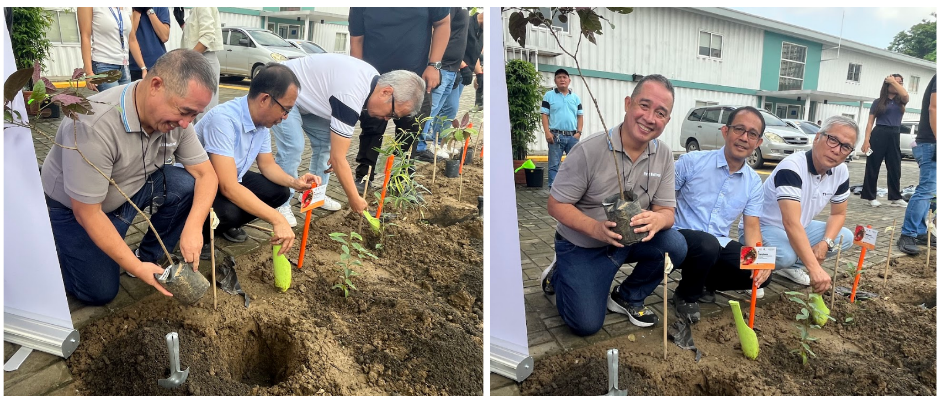
L-R: First Balfour Vice President for Strategic Business Planning and Corporate Sustainability Vicente De Lima, EDC Assistant Vice President and Head of Corporate Support Functions Atty. Allan Barcena, and First Balfour Vice Chairman and Chief Executive Officer Anthony Fernandez
Highlighting the value of the initiative, EDC Assistant Vice President and Head of Corporate Support Functions Atty. Allan Barcena shared, “What makes this project special is that we’re using the Miyawaki method. By planting trees closely together and caring for them intensively in their early years, we can accelerate growth and see a self-sustaining mini-forest emerge in less than a decade.” He further emphasized, “This is exactly the kind of solution we need in cities, where every bit of green space matters.”
Project lead Joan Dayto highlighted the significance of starting small for long-term impact, saying, “Today, a seedling takes root; tomorrow, a pocket forest rises.” Her words reflect how simple actions today can grow into powerful, lasting change.
Fostering Biodiversity and Collaboration
The pocket forest is home to a carefully selected mix of threatened and lesser-known native species. Many of them are rarely encountered in everyday life, with some found almost exclusively in reference books. These trees are at risk not only because of natural depletion, but also because they are slowly fading from public awareness.
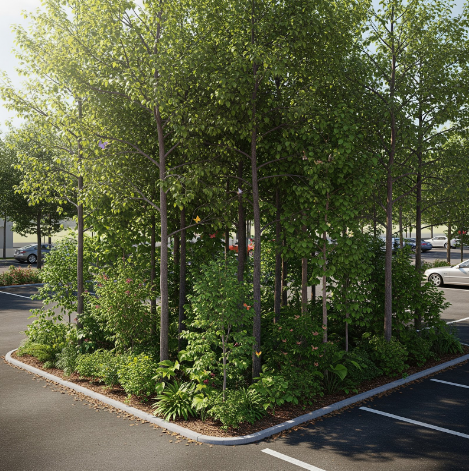
Indicative Perspective Design from EDC BINHI
Among them are the Bagauak morado (Clerodendrum quadriculare), Malakatmon (Dillenia luzoniensis), Bignai pugo (Antidesma pentandum), Igem dagat (Podocarpus costalis), Ebony (Diospyros ferrea), Ooi (Diospyros philippinensis), Apunan (Dispyros cauliflora), Kamagong (Diospyros blancoi), Banuyo (Wallaceodendron celebicum), Molave (Vitex parviflora), Bolong eta (Diospyros pilosanthera), Yakal-saplungan (Hopea plagata), Quisumbing gisok (Hopea quisumbingiana), and Yakal-malibato (Shorea malibato). This initiative complements EDC BINHI’s advocacy of mainstreaming native trees and bringing them back into public awareness.
Underscoring the importance of collaboration in making the initiative possible, First Balfour Vice President for Strategic Business Planning and Corporate Sustainability Vicente De Lima shared, “The First Balfour pocket forest is a fascinating initiative. Imagine this: Planting 58 indigenous trees within 30 square meters of limited space in our head office grounds. To make this work, we had to deploy the Miyawaki Method, which is a reforestation technique that creates dense, multi-layered mini-forests in a short period of time. Since we are engineers and architects in First Balfour and not foresters, we had to seek the technical help of the good people of EDC Project BINHI to make it happen. Truly, that is collaboration in action.”
More than just a green space, the pocket forest showcases how small urban areas can be transformed into vibrant ecosystems that support biodiversity, improve microclimates, and inspire a shared commitment to sustainability.